Beyond the Uniform: Skin Camouflage and the Meaning of Remembrance Sunday
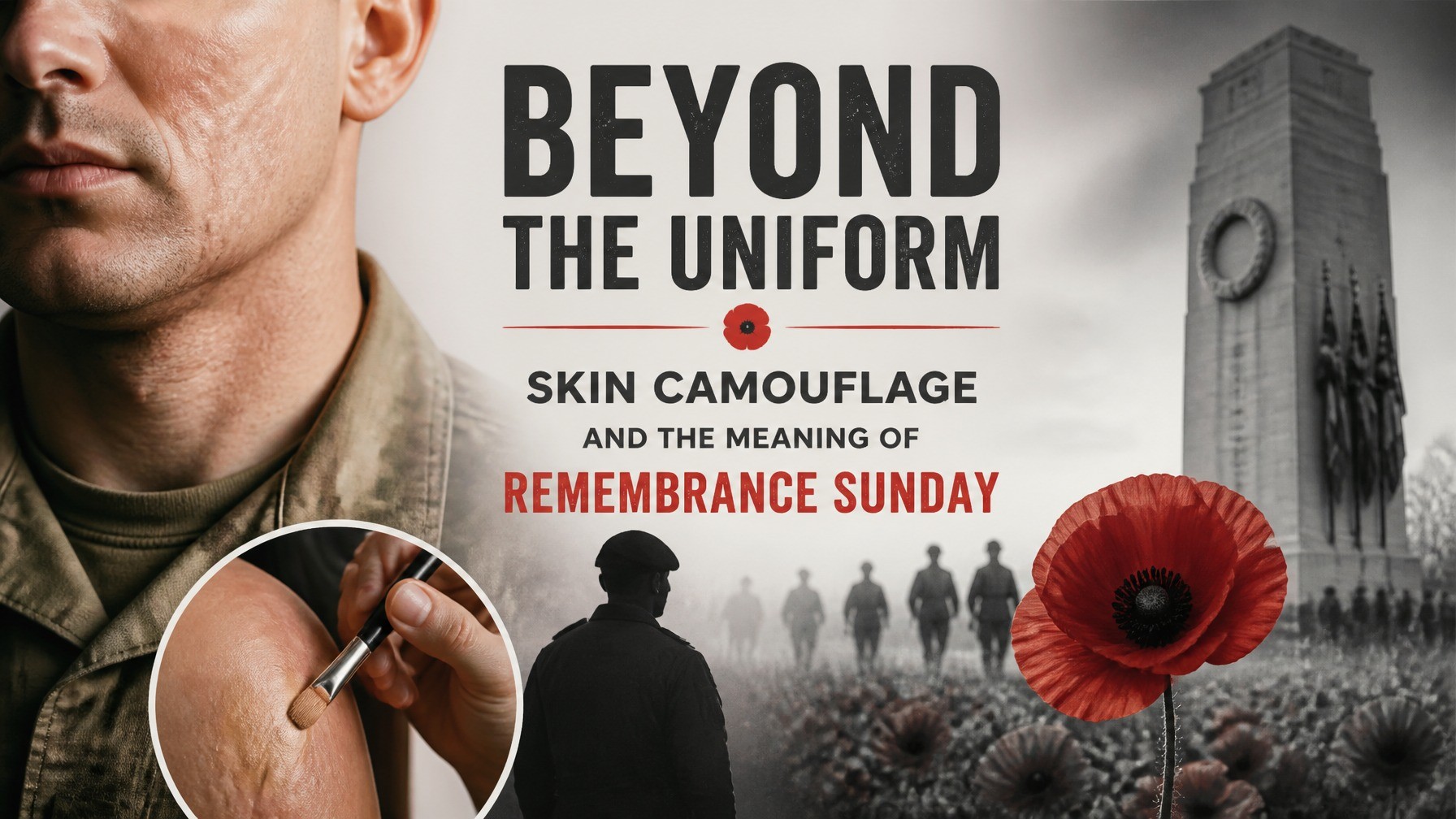
Remembrance Sunday is a time to pause, reflect and remember those who have served, sacrificed and suffered in conflicts past and present. We traditionally remember through poppies, wreaths, military parades and moments of silence. Yet, alongside the stories of courage and sacrifice, there are also personal stories of survival, recovery and the lifelong impact of conflict.
For those who have experienced burns, injuries, scarring or disfigurement, the physical reminders of trauma can remain long after the conflict has ended. While some wounds heal with time, others leave lasting marks that can affect confidence, identity and emotional wellbeing.
The Role of Skin Camouflage
Skin camouflage is a specialist technique that uses highly pigmented, water-resistant products to help conceal visible differences in skin tone, including scars, burns, birthmarks, surgical marks and certain skin conditions. It is not about erasing someone's experiences or hiding their history. Rather, it offers individuals a choice about how they present themselves to the world.
Restoring Confidence and Choice
For veterans and those affected by conflict, this choice can be particularly meaningful. Visible scarring can serve as a constant reminder of traumatic experiences, sometimes attracting unwanted attention, questions or assumptions from others. Skin camouflage can help reduce this attention, allowing individuals to feel more comfortable in social situations and regain a sense of control over their appearance.
More Than Skin Deep
However, it is important to recognise that camouflage is not simply about appearance. Its benefits can extend into psychological wellbeing, self-esteem and confidence. For someone living with a visible injury, being able to attend a family gathering, return to work or participate in everyday activities without feeling self-conscious can make a significant difference.
Remembering the Invisible Wounds
Remembrance Sunday also reminds us that not all wounds are visible. Many service personnel and veterans live with emotional and psychological scars that cannot be seen. Skin camouflage cannot address these deeper experiences, but it can form part of a wider approach to supporting people whose lives have been changed by injury, illness or trauma.
A Lasting Commitment to Dignity
Perhaps the most important connection between skin camouflage and remembrance is the idea of dignity. We remember those who have sacrificed so much, but we must also remember those who continue to live with the consequences. Their experiences do not end when they leave the battlefield, and our support for them should not end when the commemorations are over.
We Will Remember
This Remembrance Sunday, as we wear our poppies and observe the two minutes' silence, let us also recognise the individuals living with visible differences and lasting physical reminders of their experiences.